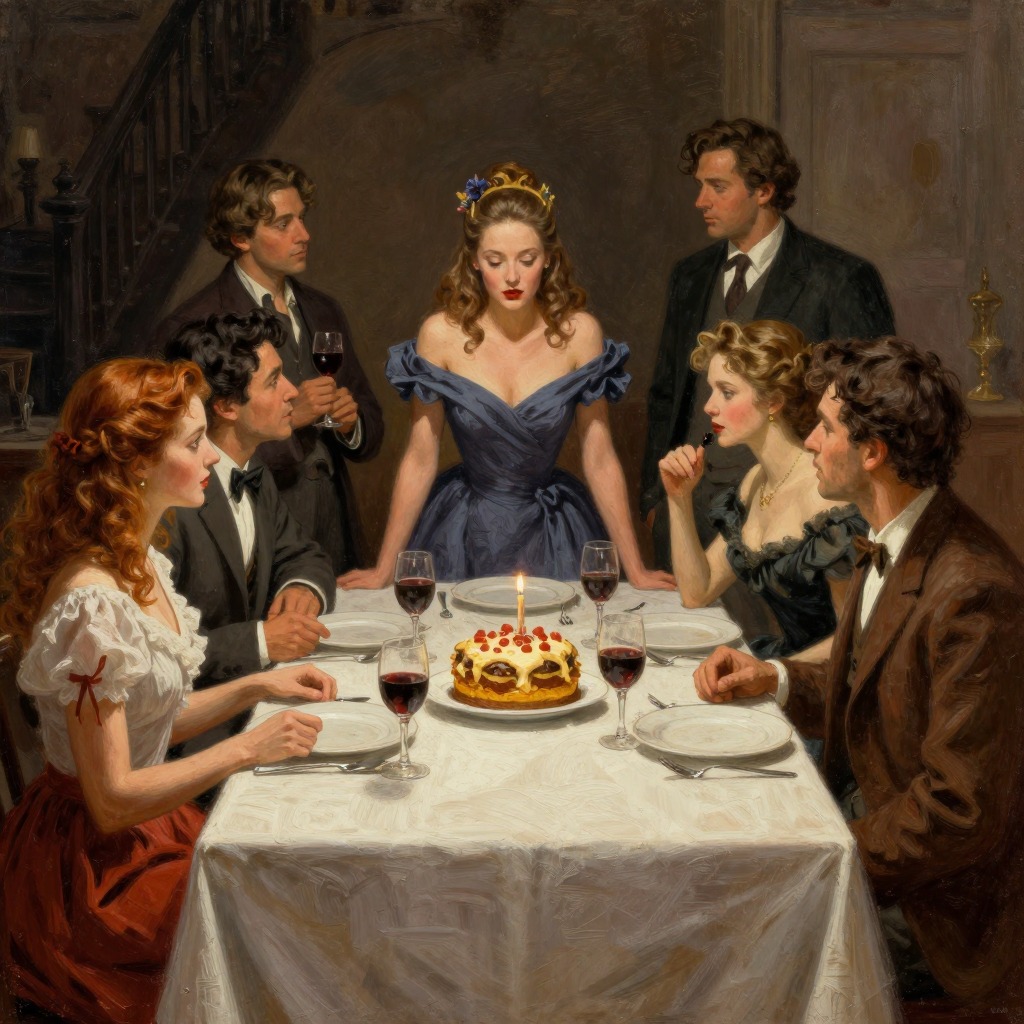
Birthday cake
The birthday cake appears in Scene Seven, when Stella is completing decorations for a birthday supper in the Kowalski apartment. The table is set with cake and flowers, and Stella automatically starts sticking little pink candles into the white cake. When Stanley asks how many candles she is putting in, Stella says she will stop at twenty-five, a deliberate undercount that conceals Blanche's true age and preserves the fragile fiction Blanche maintains about her youth.
Appearance and Symbolic Meaning
The cake is a white cake with pink candles, a conventional symbol of celebration and new beginnings. In the context of the play, however, it becomes a bitterly ironic object. Blanche's birthday is in mid-September, and the supper takes place late that afternoon, with the view through the big windows fading into a still-golden dusk. The cake's presence marks the occasion of Blanche's birth, but the celebration is hollow: the fourth place at the table remains vacant because Mitch, whom Blanche expected to marry, has not come. The cake thus stands for the hopes Blanche has invested in a new life with Mitch, hopes that Stanley has already destroyed by revealing her past.
The Birthday Supper Scene
During the dismal birthday supper, Blanche tries to maintain a tight, artificial smile on her drawn face. She attempts to tell a joke about an old maid and a parrot, but Stanley pays no attention, reaching over the table to spear his fork into the remaining chop and eating it with his fingers. Stella, embarrassed and sad, tells Stanley his face and fingers are disgustingly greasy and orders him to wash up. In response, Stanley hurls a plate to the floor and seizes Stella's arm, declaring himself the king around here. The cake remains on the table, untouched, as the family disintegrates into violence.
Lighting the Candles
After Stanley's outburst, Stella returns to the kitchen and starts lighting the candles on the white cake. Blanche, returning from the bedroom, sees the pretty, pretty little candles and pleads with Stella not to burn them, saying they ought to save them for baby's birthdays. She expresses a wish that candles are going to glow in his life and that his eyes are going to be like candles, like two blue candles lighted in a white cake. This moment is one of Blanche's most vulnerable and sincere expressions of hope for the future, directed not at herself but at Stella's unborn child. Stanley, sitting down, dismisses her words with the sarcastic comment "What poetry!"
The Cake as a Token of Betrayal
The birthday cake is also the occasion for Stanley's cruelest gesture. After the phone rings and Stanley takes the call, he reaches into a pocket and produces a little envelope, which he presents to Blanche as a birthday remembrance. She opens it to find a bus ticket back to Laurel on the Greyhound, for Tuesday. The Varsouviana music steals in softly as Blanche tries to smile, then tries to laugh, then gives both up and runs into the bathroom, where coughing and gagging sounds are heard. The cake, with its lit candles, becomes a mocking backdrop to this final humiliation. Stella tells Stanley he didn't need to do that, but Stanley insists he is only returning what Blanche gave him. The cake remains uneaten, its candles burning down, as Blanche's last hope for a new life is extinguished.
Thematic Significance
The birthday cake condenses the play's central themes of illusion and reality, hope and destruction. It is a conventional object of celebration that becomes an instrument of cruelty. Blanche's wish that the candles glow in the baby's life contrasts sharply with the darkness closing in on her own. The cake's presence at the supper table, untouched and finally forgotten, mirrors Blanche's own fate: she is present but unwanted, celebrated but condemned. The cake is never eaten, just as Blanche's dreams of marriage and escape are never realized. It stands as a silent witness to the Kowalski household's capacity for both tenderness and brutality, and to the impossibility of Blanche's survival in a world that demands realism over magic.